

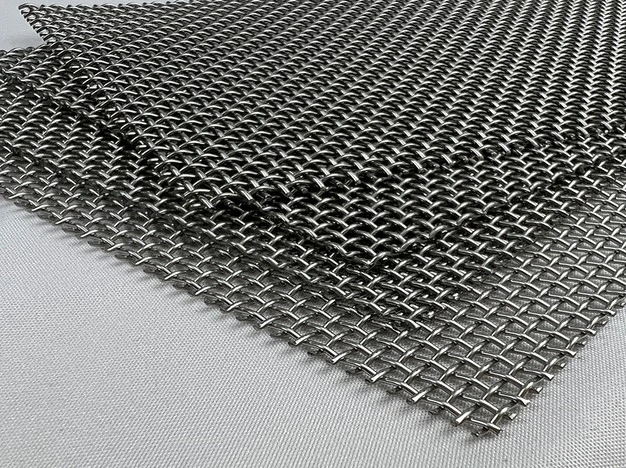
Residential security screens are not exposed to extreme forces every day, but they are exposed to constant, low-level stress. Opening and closing doors, wind-induced vibration, temperature changes, and routine cleaning all contribute to material fatigue over time.
Material fatigue is one of the most underestimated factors in residential safety products. While initial strength tests may show high performance, long-term behavior determines whether a screen remains safe after years of use.
WeaveTec stainless steel screens are engineered to resist fatigue through material selection and weaving method. Stainless steel grades such as 304 and 316 offer high elongation capacity-typically 30–40%-allowing wires to flex repeatedly without cracking. Tensile strength values ranging from 900±40MPa(860-940MPa) ensure that elasticity is preserved without permanent deformation.
The plain square weave structure plays a critical role in fatigue resistance. Micro-movements are distributed across the entire mesh surface, reducing the likelihood of fatigue cracks.
In residential environments, this translates into consistent performance for balcony doors, frequently used windows, and ventilation openings. Screens remain taut, stable, and visually uniform even after thousands of operational cycles.
Understanding how materials behave over time allows homeowners to select safety solutions that perform reliably-not just when new, but throughout their service life.