

When specifying stainless steel mesh for security and architectural applications, the square weave and diamond mesh-two fundamentally different manufacturing approaches-impacts structural performance, visual appearance, and long-term durability. Understanding these differences is essential for optimizing building projects where both safety and aesthetics are priorities.
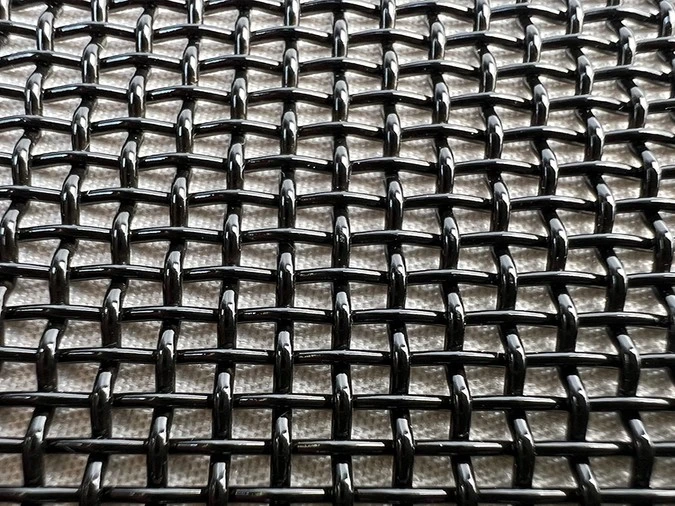
Square weave (woven wire mesh) is produced through an interlacing process where warp and weft wires are woven together at 90-degree angles, creating a grid of precise squares or rectangles. This traditional weaving method is used for security screens, insect meshes, and industrial filtration. Products like WeaveTec's security screens-with 9-12 mesh per inch and apertures of 1.2mm to 2.0mm-are manufactured using this method.
Diamond mesh is produced by slitting and stretching a solid metal sheet in a single operation, creating diamond-shaped openings. This process expands the original material to 3-4 times its width, making it remarkably material-efficient. The result is a rigid, one-piece structure with no welded or woven joints.
Rigidity and Load Distribution
Square weave offers exceptional structural strength and uniform stress distribution. Our stainless steel security mesh, woven from high-tensile wire with an tensile strength of 900±40MPa (860-940MPa) and elongation of 30-40%, ensures that loads are transmitted evenly across the mesh surface, providing consistent tensile resistance in all directions. The plain weave construction, with a mesh count of 9-12 per inch and open area of 40-60%, delivers the mechanical integrity required for applications demanding flatness (achieving unbending flatness), dimensional stability, and resistance to deformation under pressure. In security applications, this strength means the mesh resists being pushed inward or compromised under forced entry attempts-validated by passing the AS5041 Knife Shear Test.
Diamond mesh, by contrast, derives its tensile capacity from continuous, unbroken strands throughout the expanded sheet. Because it is formed from a single piece of metal with no welded or woven joints, diamond mesh offers a higher strength-to-weight ratio. This characteristic makes it particularly effective for applications requiring impact absorption while maintaining structural integrity under dynamic loads.
Applications and Use Cases
When to Choose Square Weave
Square weave is the preferred choice for applications requiring precision, uniformity, and maximum security. The precise grid structure ensures consistent aperture size, making it ideal for insect screening (where apertures of 1.2mm to 2.0mm are required), security windows and doors, industrial filtration, and machine guards.
In residential security screens, square weave provides the rigidity necessary to resist cutting tools and forced entry attempts. The woven construction also supports the advanced powder coating processes offered by WeaveTec, ensuring even coverage and long-term corrosion resistance. The pattern's visual clarity and excellent visibility make it well-suited for applications where unobstructed views are essential.
When to Choose Diamond Mesh
Diamond mesh excels in architectural applications where flexibility, lightweight construction, and distinctive aesthetics are priorities. The expanded metal process allows for large, open diamond patterns that provide excellent visibility while maintaining structural integrity. Common applications include sunscreens, building facades, balustrade infills, suspended ceilings, and decorative screening.
The diamond pattern creates a striking visual effect that can make a building stand out. This is why architects often specify diamond mesh for high-profile architectural projects where visual impact is a key consideration.
The choice between diamond mesh and square weave is not about which is superior, but which better meets specific project requirements. Square weave-the method used for WeaveTec's security screens-offers superior precision, security resistance, and uniformity, making it the ideal choice for security applications where performance and reliability are paramount. Its predictable strength characteristics and proven performance in safety-critical applications justify its position as the industry standard for high-security screening.
By understanding these differences, specifiers and architects can make informed decisions that balance safety, performance, and visual appeal in their building projects. Whether prioritizing the precise security of square weave or the architectural impact of diamond mesh, proper selection ensures both aesthetics and protection are optimized.