

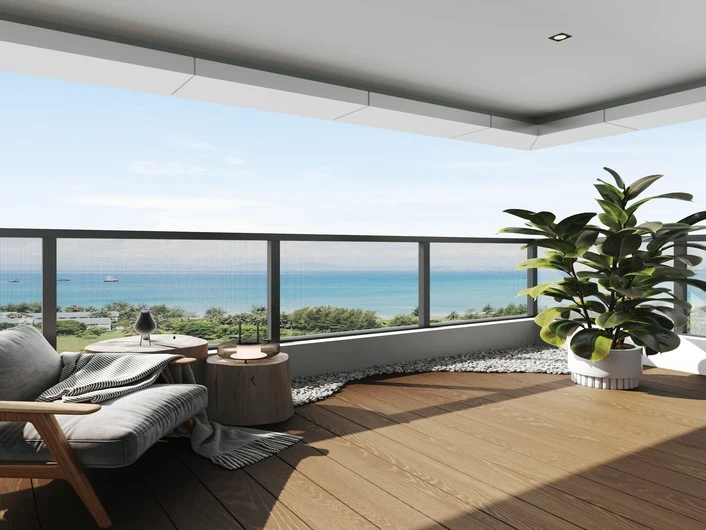
In modern residential architecture, safety screens are increasingly expected to perform beyond simple enclosure. Balcony edges, floor-to-ceiling windows, stair voids, and large ventilation openings all introduce structural risk points within the home. WeaveTec stainless steel mesh is engineered to function not merely as a screen, but as a load-bearing safety element capable of managing real mechanical stress within residential environments.
Structural-grade stainless steel mesh is designed to withstand sustained pressure from leaning, pushing, or accidental impact. WeaveTecMesh achieves this through controlled wire tension and a reinforced woven structure that allows loads to be distributed across the entire panel rather than concentrated at individual points.
In residential use, this characteristic becomes critical. Children leaning against balcony screens, adults resting against open windows, or furniture accidentally pressing against safety barriers all introduce static loads that ordinary mesh cannot handle. Stainless steel's inherent elasticity allows controlled deflection without permanent deformation, enabling the mesh to absorb force and return to its original shape.
Another key factor is frame interaction. WeaveTec screens are designed to work as part of a complete system, where mesh panels are mechanically locked into aluminum or steel frames. This integration allows loads to transfer from the mesh surface into the surrounding structure, improving overall resistance and preventing pull-out failures.
From a safety perspective, this load-bearing capability significantly reduces the risk of sudden collapse or opening enlargement over time. Unlike traditional bars, the mesh maintains visual openness while still providing a reliable physical barrier, particularly valuable in high-rise apartments and family homes with children or elderly residents.
By treating stainless steel mesh as a structural component rather than an accessory, WeaveTec enables architects and homeowners to design safer, more open residential spaces without sacrificing protection or aesthetics.