

One of the most common complaints about conventional screening materials is sagging. Some screens may appear perfectly tensioned when first installed, yet after several years of exposure to daily use, environmental changes, and mechanical stress, the mesh begins to lose its original shape.
Sagging is not merely an aesthetic issue. It can affect door operation, reduce structural integrity, create uneven stress distribution, and negatively impact the appearance of a building.
Sagging is rarely caused by a single event. Instead, it develops gradually as a result of repeated loading and material fatigue. This is where the concept of structural becomes important.
The structure of the mesh can help materials recover and maintain their original geometric shape after being subjected to stress. In woven stainless steel security screens, structural is one of the key factors that determines whether a mesh panel remains stable after years of service.
At WeaveTec, structural is engineered into every panel mesh through the combination of high-tensile stainless steel wire, controlled weaving processes, and optimized mesh geometry.
What May Causes Mesh Sagging?
Many people assume that mesh sagging occurs simply because a material becomes old. In reality, sagging results from a gradual loss of internal tension.
- Repeated opening and closing of doors
- Wind-induced vibration
- Daily contact
- Thermal expansion and contraction
- Gravity acting over long periods
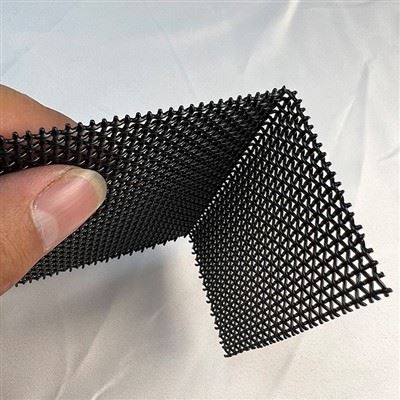
If the material lacks sufficient recovery capability, these stresses accumulate and eventually cause permanent deformation.This is why some screening materials begin to droop after only a few years, while others remain stable for decades.
In stainless steel mesh, structural memory depends on three primary factors:
- Material properties
- Wire tensile strength
- Weaving geometry
These factors work together to maintain dimensional stability over time.When a force is applied to the mesh, the structure may temporarily flex.However, if the material possesses strong structural, it returns to its original position once the force is removed.This recovery behavior helps preserve both appearance and performance throughout the lifespan of the screen.
The Role of High-Tensile Stainless Steel Wire
The foundation of structural memory begins with the stainless steel wire itself. WeaveTec security screens are manufactured using high-tensile stainless steel wires that typically achieve:
| Property | Typical Value |
| Material | 304 / 316 Stainless Steel |
| Tensile Strength | 900±40MPa(860-940MPa) |
| Wire Diameter | 0.6-1.2 mm |
| Wire Elongation | 30-40% |
High tensile strength allows the wire to resist stretching under load. At the same time, controlled elongation characteristics provide enough flexibility to absorb temporary forces without causing permanent deformation. This balance between strength and elasticity is essential for maintaining structural.
Why Weaving Geometry Matters?
Material strength alone cannot prevent sagging.The arrangement of the wires within the mesh structure is equally important.WeaveTec security screens use a precision plain square weave configuration.
In this structure:
- Every warp wire alternates over and under each weft wire
- Forces are distributed in multiple directions
- Load sharing occurs across numerous intersections
This interconnected geometry creates a self-supporting network that resists localized stretching.Instead of concentrating force in one area, the woven structure distributes stress throughout the entire panel mesh.The result is greater resistance to long-term deformation.